
For beginners, growing a variegated ficus can be a rewarding and visually stunning experience. Known for its unique leaf patterns and vibrant colors, a variegated ficus can brighten any indoor space while providing air purification and a touch of nature. However, for beginners to plant care, what often proves difficult to master are the specific care requirements of a particular plant. In this guide, we offer practical advice for novices to help you cultivate a healthy, thriving variegated fig.
Introduction to Variegated Ficus
The variegated ficus is a member of the Ficus family, renowned for its striking variegated leaves, which display combinations of green, white, yellow, or cream. Unlike standard ficus species, the variegated varieties require slightly more attention due to their delicate leaf patterns and sensitivity to environmental changes.
- Common varieties include: Weeping fig ‘Variegated’, Indian rubber tree ‘Tineke’, and the variegated variety of fiddle-leaf fig. Each variety features distinct leaf shapes and color distributions, making it an ideal choice for indoor decoration.
- Adaptability: While variegated ficus can grow outdoors in tropical climates, they are best suited for indoor conditions where light, temperature, and humidity can be controlled.
- Why beginners love them: A variegated ficus offers a combination of aesthetic appeal and indoor air quality improvement. Their dramatic leaf patterns can serve as a focal point, making them highly desirable for new plant owners.
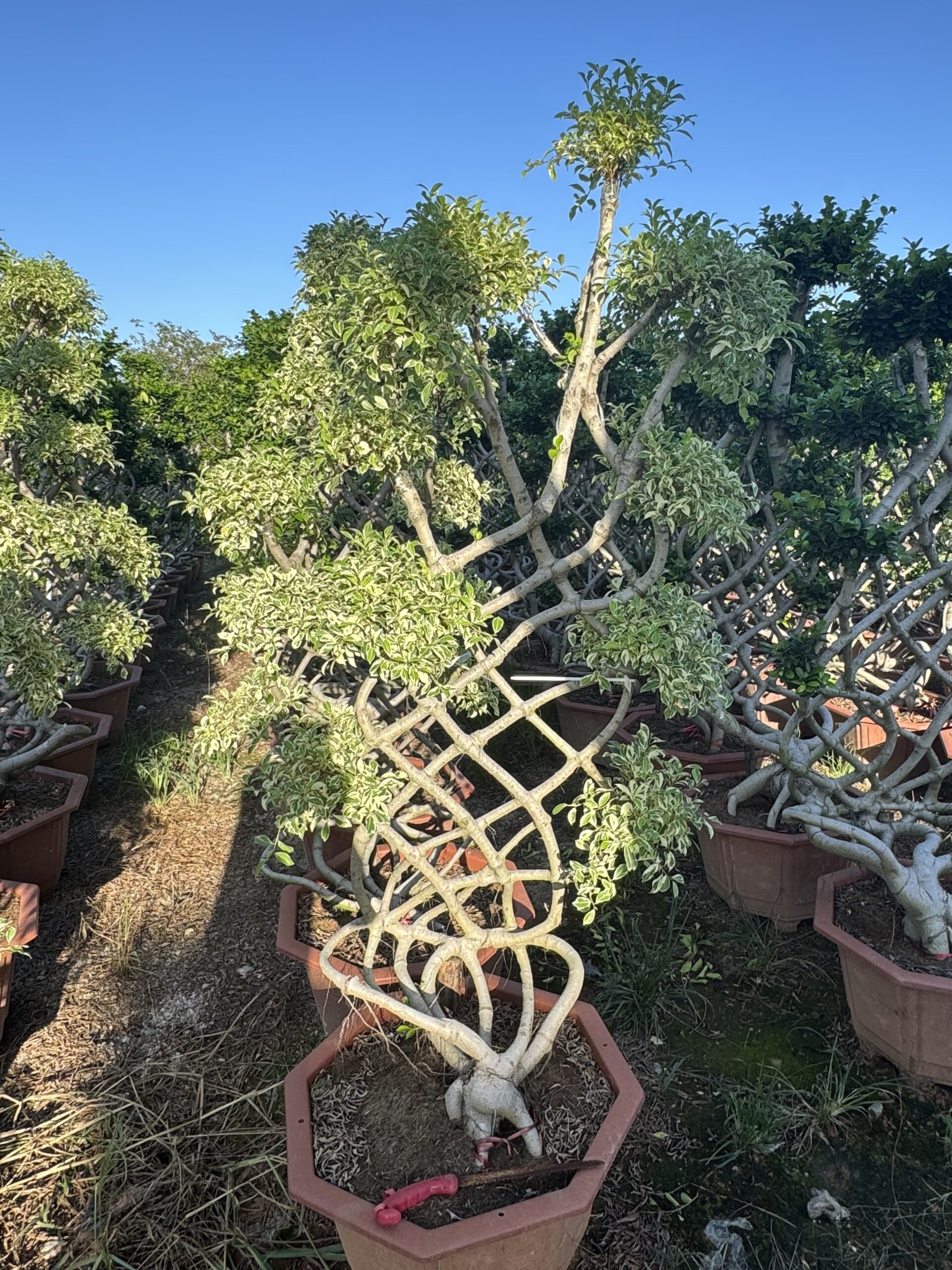
Light and Temperature Needs for Variegated Ficus
Understanding variegated ficus light and temperature needs is crucial for beginners, as improper conditions can lead to leaf drop, discoloration, or slow growth.
- Lighting Requirements: Variegated ficus thrives in bright, indirect light. Under intense, direct sunlight, the plant’s leaves—particularly the lighter-colored variegated areas—may suffer burns. Conversely, insufficient lighting can cause the plant to lose its variegated characteristics.
- Temperature Considerations: Variegated ficus prefers a stable, comfortable indoor environment. Avoid placing the plant near drafts, heating vents, or air conditioners, as sudden changes can stress the plant and affect leaf health.

Watering, Soil, and Fertilization for Variegated Ficus
Proper variegated ficus care involves balancing water, soil quality, and nutrients to maintain vibrant foliage. Beginners often overwater or choose unsuitable soil, which can lead to root problems.
- Watering Guidelines: Water the plant when the soil starts to dry slightly. A consistent routine helps avoid both overwatering and underwatering.
- Soil Requirements: Use a well-draining potting mix, such as a combination of peat, perlite, and bark. Avoid heavy garden soils that retain too much water, as variegated ficus roots are sensitive.
- Fertilization Tips: Apply a balanced liquid fertilizer during the growing season and reduce fertilization during slower growth periods. Proper nutrition maintains vibrant leaf variegation and overall plant health.
Common Problems and Solutions for Variegated Ficus
Even with proper care, beginners may encounter issues with their variegated ficus. Understanding these challenges is essential for keeping your plant healthy.
- Leaf Yellowing or Dropping: Often caused by overwatering, low humidity, or insufficient light. Solution: Adjust watering, maintain adequate humidity, and ensure proper light exposure.
- Pest Infestation: Variegated ficus is susceptible to pests such as spider mites, mealybugs, and scale insects. Solution: Inspect leaves regularly and treat infestations with gentle insecticidal solutions.
- Loss of variegation: Insufficient light or excessive fertilization may cause the leaves to degenerate into green. Solution: Maintain adequate light and moderate fertilization to preserve leaf patterns.
- Root and Soil Problems: Poor drainage can cause root rot. Solution: Repot the variegated ficus in fresh, well-draining soil and adjust watering as needed.

Tips for Thriving Variegated Ficus for Beginners
- Rotate the plant regularly to encourage uniform growth and prevent leaning toward light sources.
- Gently wipe the dust off the leaves to maintain their shine and promote photosynthesis.
- Choose flowerpots with drainage holes for planting to avoid waterlogging and root rot.
- Plant Ficus microcarpa in combination with other indoor plants to create a beautiful indoor garden.
Conclusion
Caring for a variegated ficus may seem challenging for beginners, but with proper attention to light, temperature, watering, soil, and pest management, these plants can thrive indoors. Their unique variegated leaves enhance home décor while improving indoor air quality.
For beginners looking for a high-quality variegated ficus, Wulala Garden offers a selection of vibrant varieties. For example, some of their variegated ficus plants display beautiful green and cream leaf patterns with natural variegation, making them ideal for indoor decoration. These carefully cultivated plants are perfect for new enthusiasts to start their indoor gardening journey. Explore the collection at Wulala Garden to find your perfect variegated ficus.