
Tabebuia Argentea is considered ornamental because of its wonderful flowers and foliage. Moreover, Tabebuia Argentea trees have high heat resistance and drought resistance. These trees are named Silver Trumpet Tree or Tree of Gold and can serve as ornamental trees in tropical and subtropical regions.
What Is the Tabebuia Argentea?
Origin and Basic Description
The Tabebuia Argentea belongs to the Bignoniaceae family and is originally found in South American countries such as Brazil, Bolivia, Paraguay, and other places. Currently, Tabebuia Argentea is a synonym of Tabebuia aurea. The Tabebuia Argentea grows in placeswith aa rainy season, sunshine, and drought.
It is a deciduous tree that demonstrates a seasonal growing period. In times of drought, the amount of leafing out can be significantly reduced to save water resources. When the growing conditions for flowering become favorable, the tree produces a lot of blooms, which makes it very decorative.
Structure of the Tree and Its General Appearance
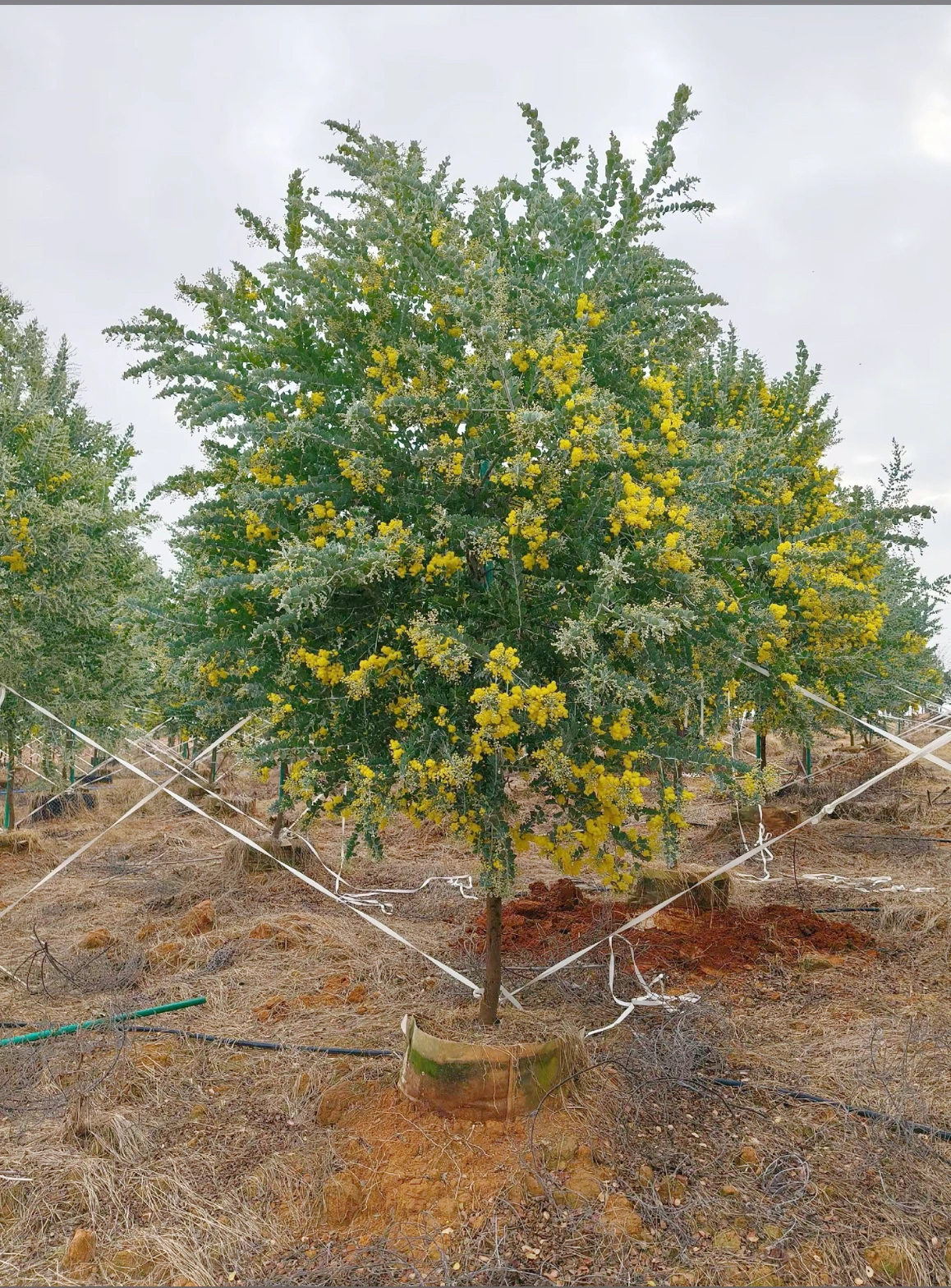
The Tabebuia Argentea is a medium-sized tree with a rounded crown and thick trunk. Mature trees reach 8-12 meters in height and depend on soil, climatic conditions, and cultivation. The bark of the tree is corky and rough, and the branches form an open crown. This peculiarity of the tree allows it to create not very dense shade; therefore, Tabebuia Argentea can be grown for residential purposes and for streets and other urban plantations.
What Are the Features of Tabebuia Argentea?
Unique Flowering Characteristics
A remarkable feature of this tree is its lovely yellow trumpet-shaped flowers. They occur in clusters at the tips of branches when the number of leaves on the tree is reduced. At the moment when the flowering is at its peak, the entire crown of the tree may be covered with bright golden flowers. Flowers serve as a food source for different insects such as bees. Main characteristics of the flowers are the following:
- Flower color: Bright yellow
- Flower shape: Tubular or trumpet-like
- Blooming pattern: Clustered at branch tips
- Main flowering season: Usually late winter to spring in suitable climates
This trait makes the tree beautiful and useful for landscaping.
Characteristics of Leaves and Seasonal Changes
One of the distinctive characteristics of Tabebuia Argentea is that the tree has unique foliage and gives the tree a special look. Its leaves are compound and consist of leaflets coming from one point. The upper part of the leaves is green, while the lower part is silver, hence the name of the tree. Moreover, the leaves help the tree to survive in dry conditions by reducing the number of leaves and thus reducing evaporation.
Tree Shape and Branch Structure
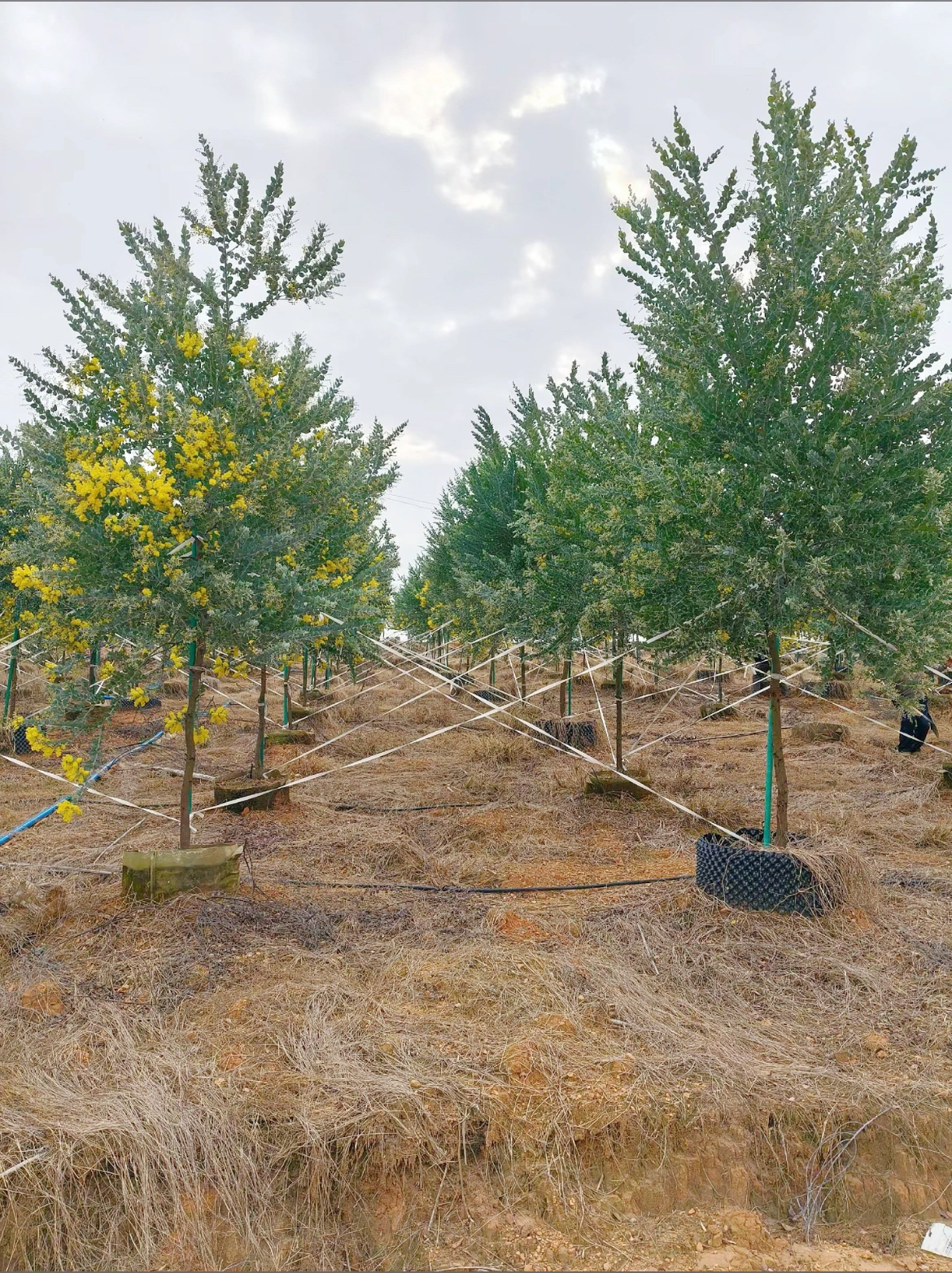
It should be noted that the most important aspect of the branch structure of Tabebuia Argentea is the elegant silhouette of the branches. While young trees grow vertically, older trees have wide branches and a round crown. The natural growth of the tree requires pruning only when dead or crossing branches are to be cut to provide ventilation. A moderately developed crown makes the tree good for planting in the street, open garden, and landscaping.
Size and Growth Characteristics
The Tabebuia Argentea is a medium-growing ornamental tree. Under favorable conditions, the tree can grow into a landscape tree within a few years.
| Growth Characteristics | Typical Ranges |
| Mature height | 8–12 meters |
| Growth speed | Moderate |
| Light requirement | Full sun |
| Soil preference | Well-drained soil |
| Life Span | Several decades |
Should be grown in sunny locations with good drainage. Poor drainage adversely impacts root development and the condition of the tree.
Climate Adaptability and Environmental Tolerance
The main valuable property of the Tabebuia Argentea is the capability to adapt to heat and drought. Such a tree is fit for the tropical and subtropical zones of the world and may grow in hot weather all year long. The best temperature for the tree is around 15 °C with sunshine, and when the tree matures, it becomes resistant to drought due to its ability to preserve water. The environmental advantages include:
- High sunlight tolerance
- Good drought resistance after establishment
- Ability to grow in seasonal dry climates
- Suitable performance in urban landscapes
These characteristics make it a good option for those who need plants with such abilities as water-saving and easy planting.
What Are the Advantages of Tabebuia Argentea?
Outstanding Ornamental Value
The key advantage of Tabebuia Argentea is its perfect ornamental performance in all seasons. With its golden flowers, the tree creates a spectacular landscaping picture, and silver-green leaves give additional decor at times when the tree doesn’t blossom. Owing to its beauty, it is often used as:
- Street tree planting
- Garden focal tree
- Park landscape feature
- Commercial outdoor decoration
Due to its flowers, leaves, and tree-forming ability, the tree enhances small gardens and large spaces.
Low Maintenance Requirements
Another advantage is the simple care. When the root system is developed, it requires minimal maintenance. In comparison with other flowering trees requiring regular maintenance, this tree guarantees good growth without much effort. Recommended measures include:
- Planting in areas with direct sunlight
- Using soil with good drainage
- Watering regularly during early growth
- Pruning occasionally to maintain shape
Conclusion
The Tabebuia Argentea is an ornamental tree with yellow trumpet-shaped flowers, greenish-silver leaves, and strong branches. The ability to resist heat and drought in certain seasons and adapt to the urban environment makes it perfect for landscaping purposes. If planted and cared for properly, the tree will serve as a decoration and an environmentally friendly tree forever. For any additional information concerning this tree, planting, and landscaping usage, do not hesitate to contact us anytime.